When AI changes work, why do we need the office?
Just a few years ago, the big conversation around offices was whether people would return to them. Working from home went from being the exception to being part of everyday life, companies experimented with various hybrid models, and employees gradually got used to the idea that the workday was not necessarily tied to one permanent location.
In 2026, the situation is different, with hybrid work remaining, but in the meantime another major change has entered everyday life - artificial intelligence. It takes over some of the routine tasks, speeds up the search and processing of information, helps with analysis, writing and planning, and gradually changes the distribution of time in the workday.
This puts the physical office in an interesting situation. If more and more individual tasks can be completed with the help of AI and from almost anywhere, it would be logical to assume that the importance of the office will decrease. However, recent international research paints a more complex picture.
Gensler Research Institute tracked the work habits of more than 16,000 office workers in 16 countries in its Global Workplace Survey 2026. The average survey participant spends 55 percent of their workweek in the office, and the work pattern has remained relatively stable over the past three years. What’s more interesting is how people who are already using AI intensively behave. They spend less time working independently and more time learning and socializing with colleagues. So-called AI Power Users spend an average of 12 percent of their week learning, compared to 8 percent for later adopters.
This does not prove that AI automatically makes people more social, nor that the technology will bring everyone back to the office, but it does point to a possible direction: when some of the work is done faster, activities that are difficult to reduce to individual work in front of a screen, namely conversation, sharing experiences, learning from a colleague, solving a problem together, or developing an idea, can gain greater value.
The office now has to justify the trip to it
If a person can comfortably write a document, process data, or hold an online meeting from home, the reason for coming to the office cannot be simply the presence of a desk, a monitor, and the Internet. These equipment are no longer enough to distinguish a physical workplace.
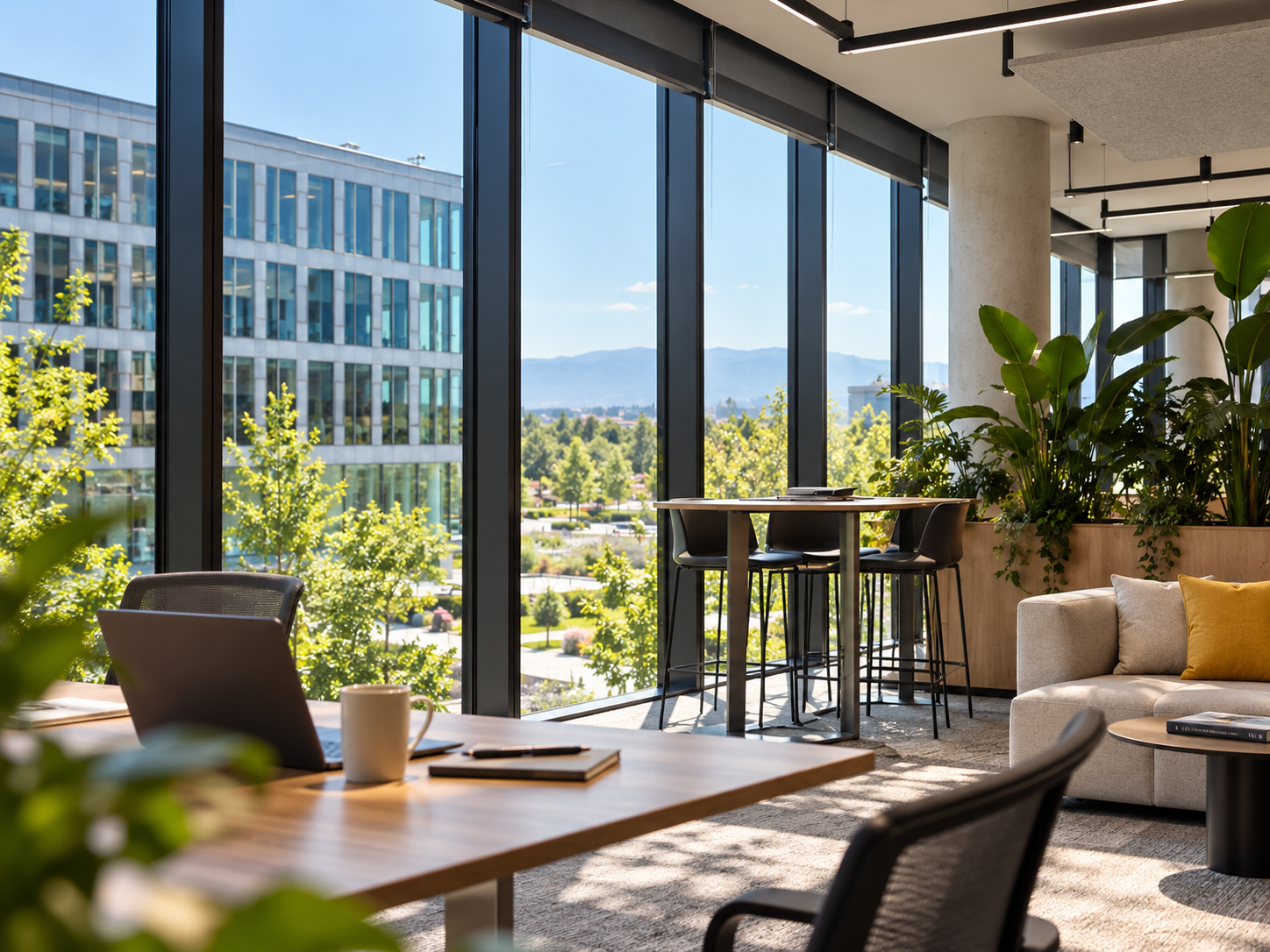
The office should offer things that are harder to replicate elsewhere. At one moment it can be a quiet area for concentration, at another - a place for team work, training, meeting with a client, or simply a chance to step away from your own desk for half an hour and continue the task in a different environment.
Unfortunately, many workspaces still fail to accommodate this diversity. In the Gensler study, two-thirds of employees said they modify or adapt their workspace in some way to compensate for its shortcomings. Some of them move furniture, seek out quieter areas, or try to solve problems with temperature, ergonomics, and visual privacy. Insufficient meeting space and noise also remain common challenges.
This is a good example of why the future of the office isn't just about more technology. Even as work becomes increasingly digital, people still have many physical and social needs that determine whether a space actually helps them.
Different work needs different places
For decades, the office was organized around a relatively simple logic: an employee has a workstation, surrounded by several meeting rooms and common areas. Today, within the same day, a person can go through individual work, an online conversation, a live meeting, a joint task with the team, training, and a period in which they simply need to be alone and think.
This also explains the interest in flexible spaces, but not necessarily in the classic sense of a coworking office. For companies, such areas can be an addition to their own premises and allow employees to change the environment according to the specific task.
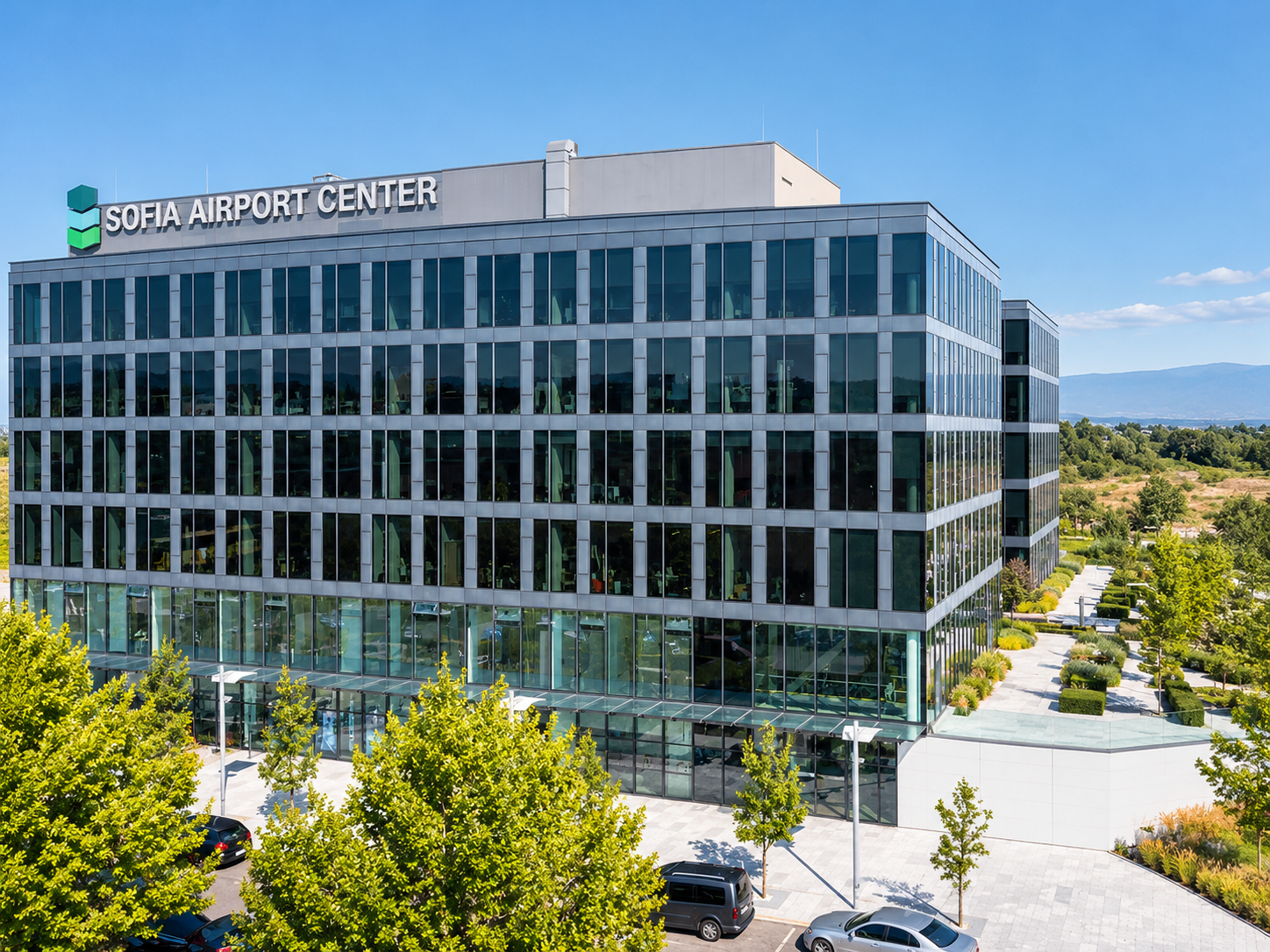
In Sofia Airport Center, such a function is provided by the Flex-R Lounge in building A2. The space is 300 sq m and has 50 workstations and a meeting room. It is accessible to companies in the complex and allows part of the working day to be moved outside the traditional office, without employees leaving the business park.
The idea is not to have everyone leave their desk at the first opportunity, but rather to provide a choice of spaces. If the task requires concentration, one can stay in one's own office, but if a more informal conversation or work with colleagues is coming up, another environment may be more suitable.
The more technology, the more human conditions matter
In the 2026 Work Trend Index, Microsoft looks at the same shift from a different perspective. The company’s analysis of more than 100,000 interactions with Microsoft 365 Copilot shows that nearly half of them involve cognitive activities such as analysis, problem-solving, evaluation, and creative thinking. Microsoft concludes that as AI’s capabilities expand, human judgment, the ability to articulate clear purpose, and the way organizations structure work itself become increasingly important.
This also has an impact on the physical environment, namely if work is gradually shifting from pure execution to more judgment, collaboration and learning, the office needs to allow these activities to happen naturally.
It is interesting what employees themselves want from their future workplace. In the Gensler survey, 46% put spaces and amenities related to physical and mental well-being among their top five priorities. 43% mentioned outdoor spaces and access to nature, and 40% wanted quiet places to concentrate and recover. The same share mentioned spaces for learning and professional development. Technological solutions such as digital walls, AR/VR and building automation are present in the expectations, but they are not at the top of the list.
This is not an argument against technology, but a view that it is useful when it improves the way people use the environment, not when it becomes an end in itself.
The workplace doesn't end at the office door.
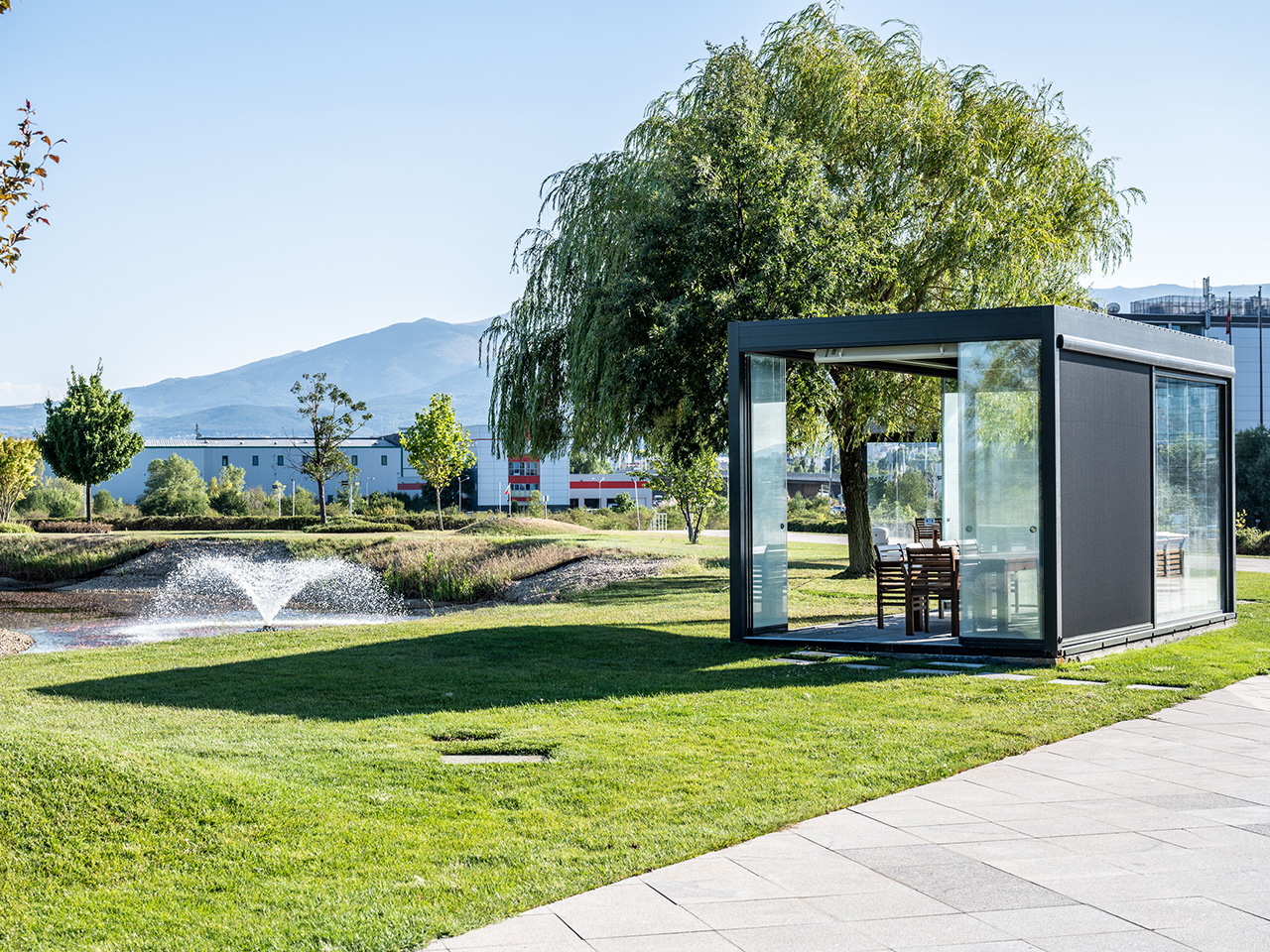
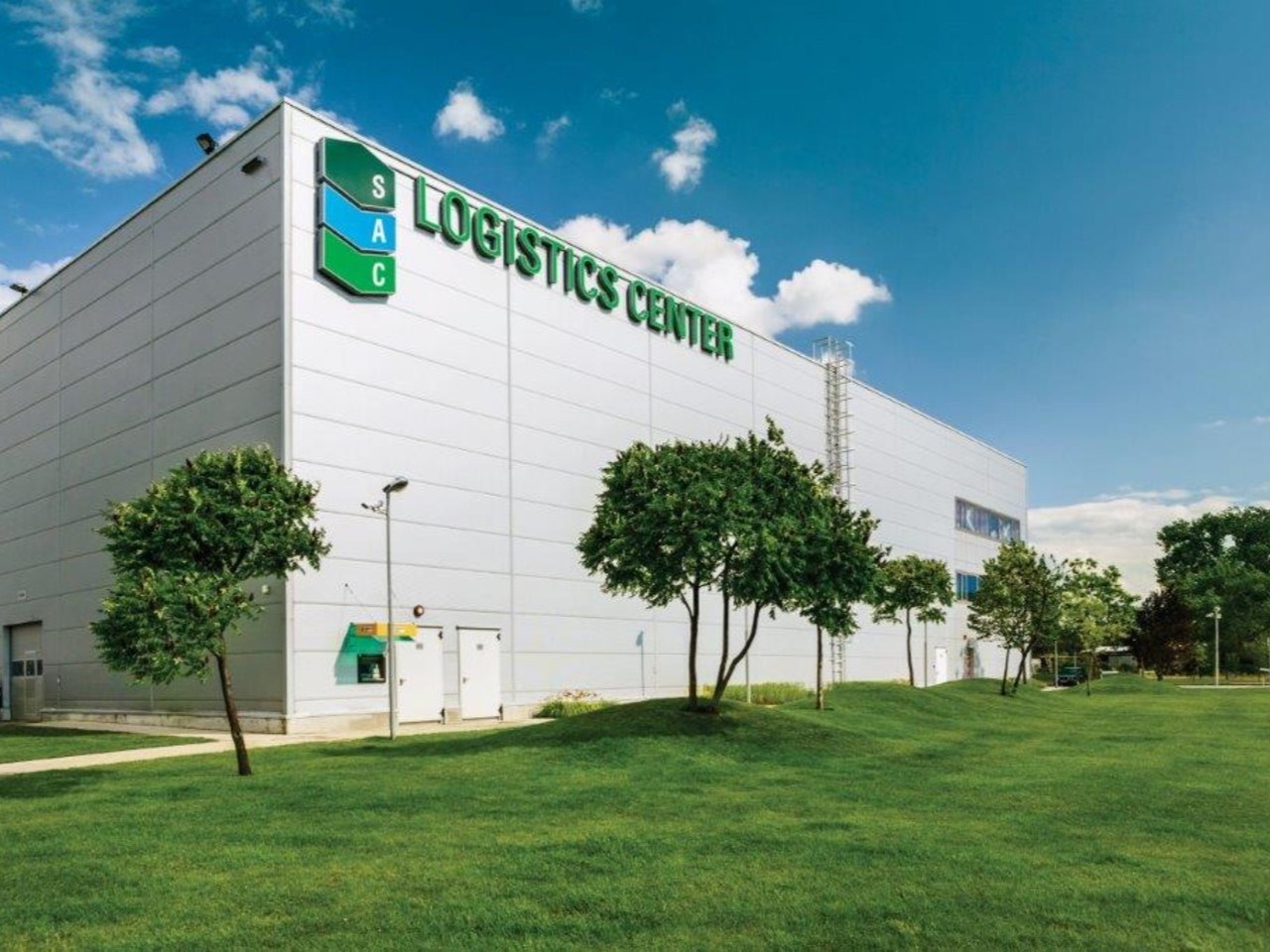
At Sofia Airport Center, the office and logistics buildings are located within a complex with 9,000 sq m of parkland and a central lake. The park has pedestrian walkways and areas that can be used during the working day, and free Wi-Fi is available both around the lake and in the Flex-R Lounge and part of the common areas of building A2.
Such an environment will not replace the office, conference room, or workstation, but it increases the number of opportunities within the day.
These are small decisions, but they are what gradually shape the difference between an office as a space and a work environment that allows people to choose how to use their day.
What will we be going to the office for in a few years?
No one can yet say with certainty how AI will change work in five or ten years. Even today's research tracks a process that is in its early stages, so it would be premature to make any firm predictions about the future of the office.
However, it is already clear that technology does not eliminate the need for people to learn from each other, to talk, to solve problems together, and sometimes simply to change the environment in which they work.
For some companies, the answer will be more collaborative work, for others , it will be training, client meetings, or team building. There will likely be organizations where much of the individual work will continue to be done remotely. What will be more important is whether the office environment can adapt to the different reasons people choose to be in one place.